Homeowners sometimes ask whether there is a cheaper or better alternative to parging an exposed foundation. The answer depends on the foundation material, the condition of the surface and what you want the finish to accomplish.
For a typical poured-concrete foundation, parging is mainly a way to create a uniform finished appearance over the exposed portion of the wall. It is not structural foundation repair, and it is not the same thing as below-grade dampproofing or waterproofing.
Does Alberta Building Code Require Parging?
Not on every foundation.
For typical Part 9 housing in Alberta, the National Building Code – 2023 Alberta Edition treats concrete block and cast-in-place concrete differently. Section 9.15.6 says concrete block foundation walls below ground are to be parged on the exterior as required by Section 9.13. Above ground, concrete block foundation walls must have tooled joints, be parged or be otherwise suitably finished.
The Code does not contain the same general parging or coating requirement for the exposed above-grade portion of a cast-in-place poured-concrete foundation. The adjacent provision for cast concrete addresses form ties rather than requiring a decorative coating.
Below grade is different. Section 9.13 can require dampproofing or waterproofing of foundation walls depending on the conditions. Those moisture-control requirements are separate from decorative above-grade parging.
You can review the building code currently in force in Alberta and the National Building Code – 2023 Alberta Edition from the National Research Council. Requirements for a particular building or assembly should be confirmed with the applicable authority having jurisdiction.
Can You Leave a Poured Concrete Foundation Bare?
Yes. If the visible above-grade portion of a poured-concrete foundation is sound and you are comfortable with the appearance, it can generally be left exposed rather than being parged, painted or coated simply for appearance.
Quick answer: a sound above-grade poured-concrete foundation can generally be left bare. Parging is commonly chosen to create a more uniform finished appearance, not because every poured foundation must have a decorative coating.
The trade-off is cosmetic. Bare concrete can show form lines, colour variation, tie locations, honeycombing, patching and other surface imperfections. Parging is commonly used to give that exposed area a more consistent finished look.
What Does Parging Actually Do?
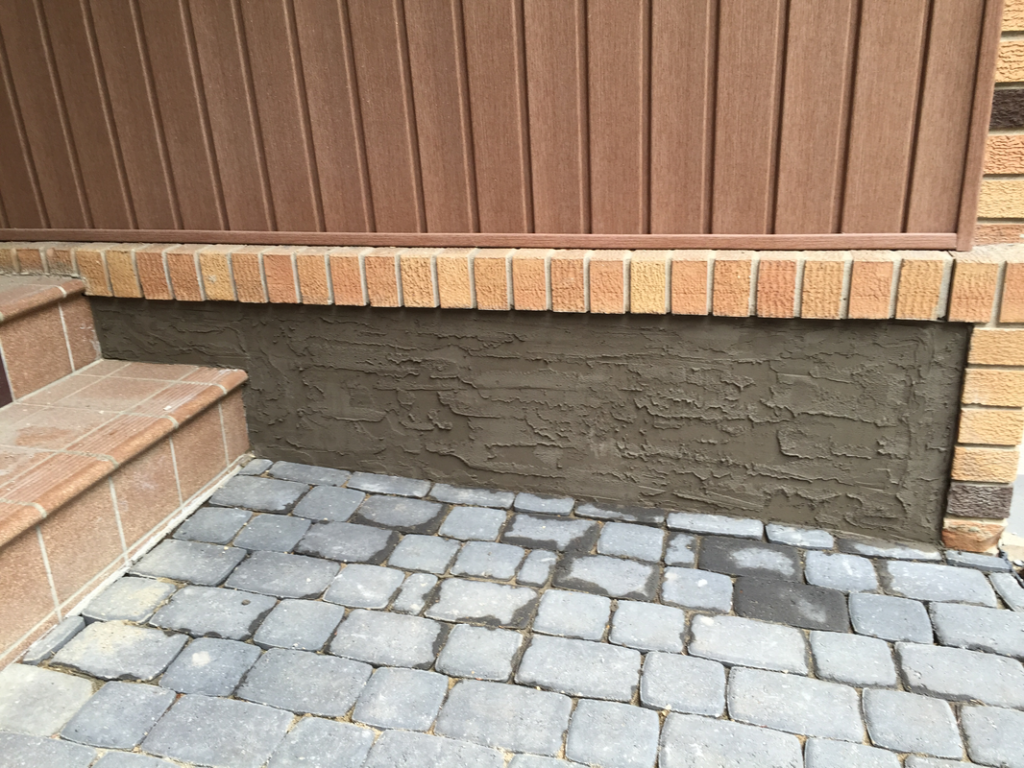
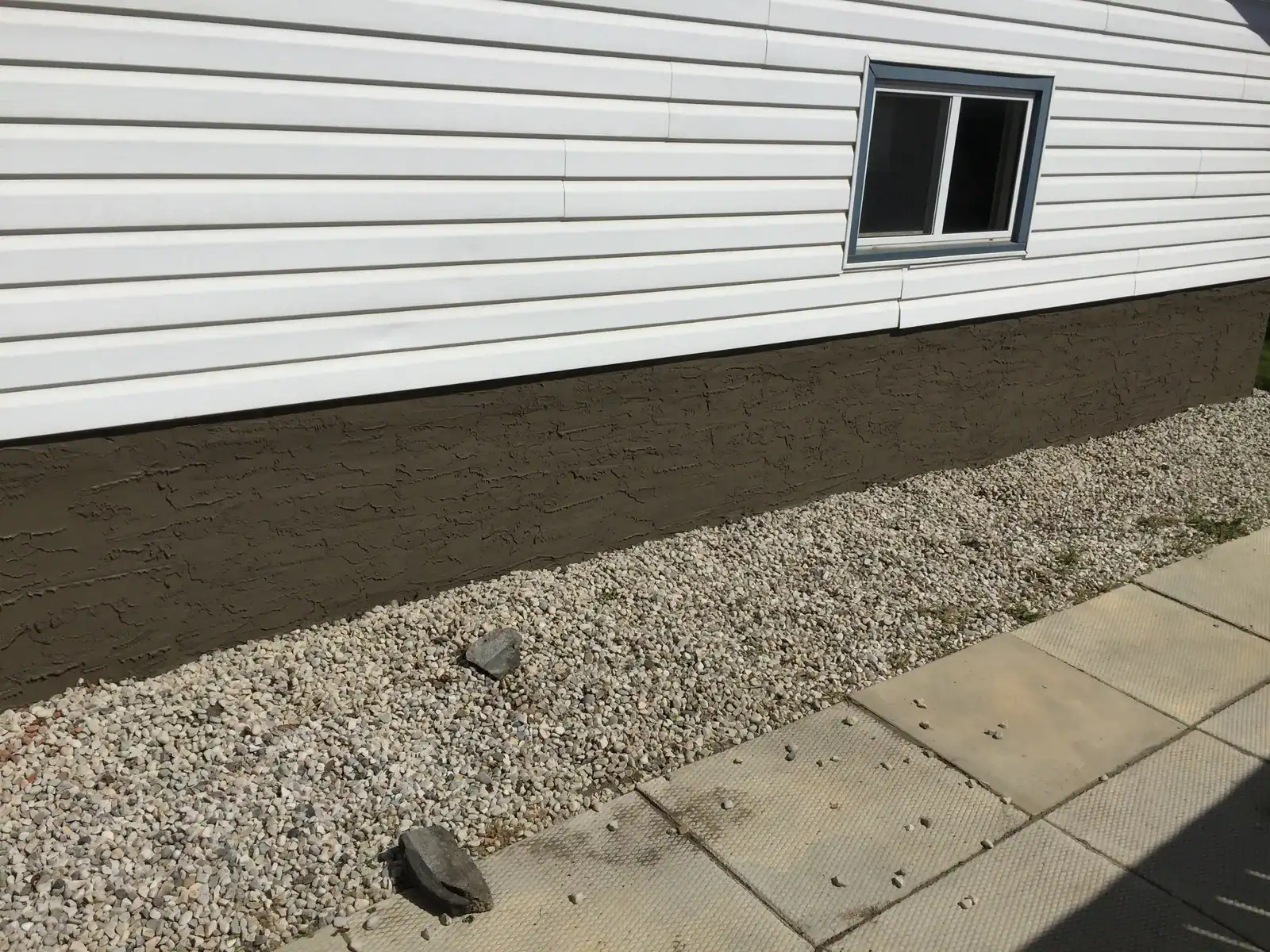
Cementitious parging creates a continuous finish over suitable concrete or masonry. On a poured foundation, its main benefits are appearance and serviceability: it can cover minor surface irregularities, create a consistent texture and provide a finish that can be repaired or renewed later.
Parging should not be relied on to correct foundation movement, stop an active structural crack, fix drainage problems or replace required dampproofing or waterproofing below grade.
Can You Paint the Foundation Instead?
Paint or a compatible masonry coating can be an option when the concrete or existing parging is sound and the goal is mainly to change the colour.
Paint does not level form marks, pits, patches or rough areas the way a cementitious parge coat can. It also does not correct loose, hollow or delaminated parging underneath it. Existing paint can add preparation if the wall is parged later because the new cementitious material needs a suitable surface to bond to.
For more detail, see our guide to paint versus parging.
What About Acrylic Foundation Finishes?
Acrylic stucco and other manufactured coating systems can provide colour and texture, but they should not automatically be treated as interchangeable with cementitious foundation parging.
Different products have different substrate, grade-clearance, drainage and termination requirements. If an acrylic or synthetic finish is being proposed for a foundation, the important question is whether that exact product and complete system are approved by the manufacturer for the location and exposure where it will be installed.
For more detail, see our article on acrylic stucco and conventional foundation parging.
Stone Veneer Instead of Parging
Stone veneer can be used as an architectural finish over portions of a foundation, but it is a different cladding system rather than a direct substitute for a parge coat.
A proper installation has to account for the substrate, moisture management, transitions, clearances and manufacturer requirements. Stone is normally chosen because of the appearance it creates, not because it is the simplest or least-expensive way to finish an exposed foundation.
Which Alternative Is the Cheapest?
If a sound poured-concrete foundation does not need to be finished for appearance, leaving the exposed concrete bare has the lowest initial finishing cost because no additional finish is being installed.
Painting a suitable sound surface may also have a lower initial cost than installing a new cementitious finish. Stone veneer and other cladding systems generally involve more components and installation work.
The comparison changes when existing parging is deteriorated. Applying a different finish over loose or delaminated material does not eliminate the need to deal with the unsound material underneath.
Want to know what we would recommend for your foundation?
Send us a few photos and the approximate dimensions. We can tell you whether we would repair it, recoat the full wall, leave sound concrete exposed or recommend another finish, and provide a written quote when parging is the right fit.
Repairing Existing Parging vs Recoating the Wall
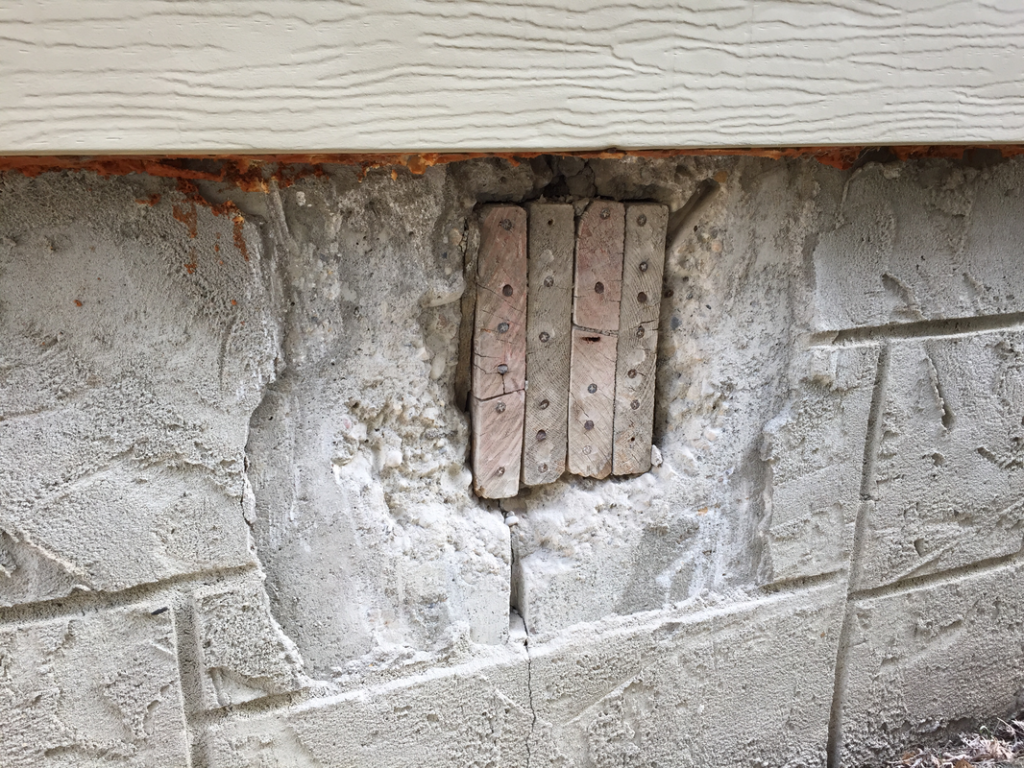
If the problem has a clear beginning and end, such as an isolated crack, basement-window area or impact-damaged section, a localized parging repair may make sense.
When deterioration is spread across a larger portion of a wall, recoating the complete wall from corner to corner usually produces a more consistent result than leaving a series of patches. See our parging replacement and full-wall recoating service for more information.
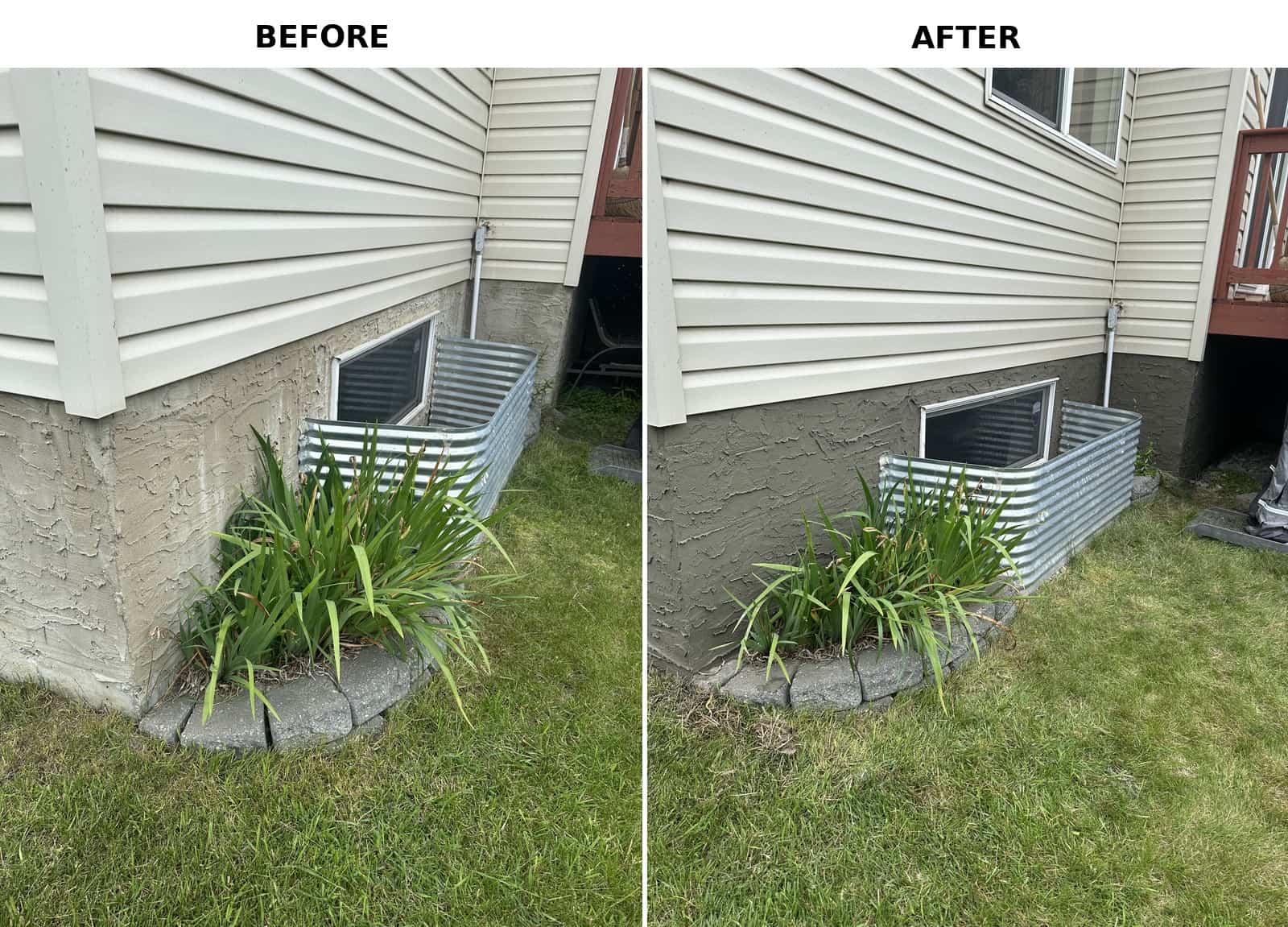
So, Is There a Better Alternative to Parging?
There is no single foundation finish that is best in every situation.
If you have sound poured concrete and do not mind its appearance, leaving it exposed may be perfectly reasonable. If the surface is sound and you only want a colour change, a compatible coating may be enough. If you want a decorative architectural feature, stone veneer or another designed cladding system may be worth considering.
If the goal is a continuous cement-based finish over an exposed concrete or masonry foundation, cementitious parging remains a straightforward option.
Not Sure What Your Foundation Needs?
If you are in Edmonton or the surrounding area, send J and J Coatings a few photos of the foundation and the approximate dimensions. We can tell you whether it looks like a localized repair, a full-wall parging project or a situation where another finish may make more sense.
Request a free quote or see our Edmonton parging cost guide for current planning information.